
Por que alunos que leem mais vão melhor em todas as matérias
Não é intuição, é ciência: o hábito de leitura correlaciona com melhor desempenho em matemática, ciências e redação. Veja o que a pesquisa comprova e o que a escola pode fazer.
Crie uma conta gratuita e continue exatamente desta página.
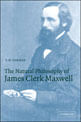
This book provides an introductory yet comprehensive account of James Clerk Maxwell's (1831-79) physics and world view. The argument is structured by a focus on the fundamental themes that shaped Maxwell's science: analogy and geometry, models and mechanical explanation, statistical representation and the limitations of dynamical reasoning, and the relation between physical theory and its mathematical description. This approach, which considers his physics as a whole, bridges the disjunction between Maxwell's greatest contributions: the concept of the electromagnetic field and the kinetic theory of gases. Maxwell's work and ideas are viewed historically in terms of his indebtedness to scientific and cultural traditions, of Edinburgh experimental physics, and of Cambridge mathematics and philosophy of science, which nurtured his career. Peter M. Harman is Professor of the History of Science at Lancaster University. He has published primarily on the history of physics and natural philosophy in the 18th and 19th centuries, the period from Newton to Maxwell. His previous books include Energy, Force, and Matter (Cambridge, 1982), The Investigation of Difficult Things (Cambridge, 1992), After Newton: Essays on Natural Philosophy (Variorum, 1993), The Scientific Letters and Papers of James Clerk Maxwell, volume 1 (Cambridge, 1990), volume 2 (Cambridge, 1995).
Livros na mesma categoria
Dicas e recomendações para leitores
Não é intuição, é ciência: o hábito de leitura correlaciona com melhor desempenho em matemática, ciências e redação. Veja o que a pesquisa comprova e o que a escola pode fazer.
Alguns leitores tratam livros como relíquias intocáveis. Outros os marcam do início ao fim. Descubra qual abordagem maximiza o aprendizado e como criar um sistema de notas que realmente funciona.
A prova de livro é um termômetro ruim: só mede quem leu o resumo. Conheça métodos que avaliam a leitura de verdade e ainda aumentam o engajamento dos alunos.
Para escolas, universidades, autores e editoras