

Pular para o conteúdo
Agricultura e Pecuária

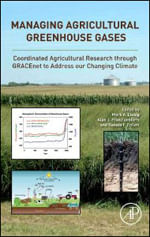
Managing Agricultural Greenhouse Gases

1ª Edição - 2012572 páginasAcademic Pressen
Seja o primeiro a avaliar
Sua leitura no Lireo

Guarde este livro na sua estante

Crie uma conta gratuita e continue exatamente desta página.

Registre seu progresso de leitura
Descubra outros leitores do mesmo livro
Participe de clubes de leitura
Organize toda sua biblioteca

Sinopse

Global climate change is a natural process that currently appears to be strongly influenced by human activities, which increase atmospheric concentrations of greenhouse gases (GHG), in particular carbon dioxide (CO2), methane (CH4) and nitrous oxide (N2O). Agriculture contributes about 20% of the world's global radiation forcing from CO2, CH4 and N2O, and produces 50% of the CH4 and 70% of the N2O of the human-induced emission. Interest is increasing among land managers, policy makers, GHG emitting entities, and carbon (C) brokers in using agricultural lands to sequester C and reduce GHG emission. Precise information is lacking, however, on how specific management practices in different regions of the world impact soil C sequestration and the mitigation of GHG emission. In 2002, the USDA Agricultural Research Service (ARS) developed a coordinated national research effort called GRACEnet (Greenhouse gas Reduction through Agricultural Carbon Enhancement network) to provide information on the soil C status and GHG emission of current agricultural practices, and to develop new management practices to reduce net GHG emission and increase soil C sequestration primarily from soil management. 'Managing Agricultural Greenhouse Gases' synthesizes the wealth of information generated from the GRACEnet project in over 30 ARS locations throughout the US and in numerous peer-reviewed articles. Although GRACEnet is an ARS project, contributors to this work include a variety of backgrounds and reported findings have important international applications. For example, many parts of the world possess similar ecoregions to the U.S. (e.g., northern Great Plains is similar to the Argentina Pampas and Ukraine Steppe). Such similarities expand the appeal of this exciting new volume to a wide international readership.

Detalhes do livro

Título
Managing Agricultural Greenhouse Gases
Autor
Mark Liebig
Editora
Academic Press
Ano
2026
Páginas
572 páginas
Idioma
EN
ISBN-13
9780123868978
Edição
1ª Edição - 2012
Formato
Hardcover

Agricultura e Pecuária

Livros na mesma categoria

Blog Lireo

Dicas e recomendações para leitores

Soluções institucionais

Para escolas, universidades, autores e editoras