Caderno Lireo65
Educação
Educação
Como acompanhar a leitura dos alunos sem aplicar prova
A prova de livro é um termômetro ruim: só mede quem leu o resumo. Conheça métodos que avaliam a leitura de verdade e ainda aumentam o engajamento dos alunos.
Crie uma conta gratuita e continue exatamente desta página.
Crie uma conta gratuita e continue exatamente desta página.
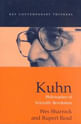
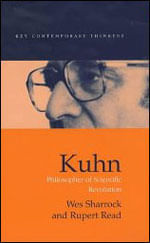
Thomas Kuhn's shadow hangs over almost every field of intellectual inquiry. His book The Structure of Scientific Revolutions has become a modern classic. His influence on philosophy, social science, historiography, feminism, theology, and (of course) the natural sciences themselves is unparalleled. His epoch-making concepts of 'new paradigm' and 'scientific revolution' make him probably the most influential scholar of the twentieth century. Sharrock and Read take the reader through Kuhn's work in a careful and accessible way, emphasizing Kuhn's detailed studies of the history of science, which often assist the understanding of his more abstract philosophical work. These historical studies provide vital insight into what Kuhn was actually trying to achieve in his The Structure of Scientific Revolutions: an endeavour far less extreme than either his 'foes' or his 'fans' claim. In the book's second half, Sharrock and Read provide excellent explications, defences and, where appropriate, criticisms of Kuhn's central concept of 'incommensurability', and tackle head on the crucial issue of whether Kuhn's insights concerning the natural sciences can be extrapolated to other disciplines, such as the social sciences. This is the first comprehensive introduction to the work of Kuhn and it will be of particular interest to students and scholars in philosophy, theory of science, management science and anthropology.
Outros livros de Wes Sharrock
Livros na mesma categoria

Confisiones, Las
San Agustin
John Locke And The Ethics Of Belief
Nicholas Wolterstorff
Practical Reasoning About Final Ends
Henry S. Richardson

Relevant Logic
Edwin D. Mares

Ceticos Gregos, os
Victor Brochard

Oeuvres Completes, Tome 1
Jean-Jacques Rousseau
Shape Of Space, The
Graham Nerlich

MutaçõEs - Ainda sob a Tempestade
Eugenio | Cicero Antonio | Novaes Adauto | Fassin Eric | Enriquez EugèNe Bucci

Moral Self,The
Pauline Chazan
Ethics Of Science, The
Autor Não Cadastrado
Essays On Political Morality
R. M. Hare
War And Cinema - The Logistics Of Perception
Paul Virilio
Dicas e recomendações para leitores
A prova de livro é um termômetro ruim: só mede quem leu o resumo. Conheça métodos que avaliam a leitura de verdade e ainda aumentam o engajamento dos alunos.
Educação financeira deveria ser matéria escolar. Como não é, estes livros fazem o trabalho, do básico ao avançado, do orçamento doméstico ao mercado global.
Em um mundo de algoritmos e vídeos infinitos, criar um filho leitor parece missão impossível. Mas há estratégias simples e comprovadas para fazer os livros competirem, e ganharem.
Para escolas, universidades, autores e editoras