

Como criar um ambiente de leitura em casa que convide (em vez de afastar)
Ambiente importa tanto quanto disciplina para criar o hábito de leitura. Pequenas mudanças no espaço físico aumentam drasticamente o tempo que você passa com livros nas mãos.
Crie uma conta gratuita e continue exatamente desta página.
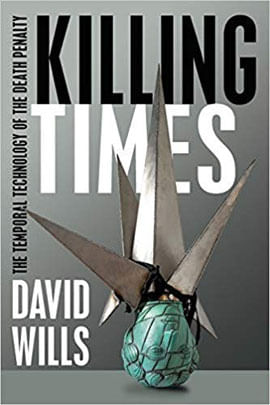
'Killing Times' begins with the deceptively simple observation?made by Jacques Derrida in his seminars on the topic?that the death penalty mechanically interrupts mortal time by preempting the typical mortal experience of not knowing at what precise moment we will die. Through a broader examination of what constitutes mortal temporality, David Wills proposes that the so-called machinery of death summoned by the death penalty works by exploiting, or perverting, the machinery of time that is already attached to human existence. Time, Wills argues, functions for us in general as a prosthetic technology, but the application of the death penalty represents a new level of prosthetic intervention into what constitutes the human. Killing Times traces the logic of the death penalty across a range of sites. Starting with the legal cases whereby American courts have struggled to articulate what methods of execution constitute “cruel and unusual punishment,” Wills goes on to show the ways that technologies of death have themselves evolved in conjunction with ideas of cruelty and instantaneity, from the development of the guillotine and the trap door for hanging, through the firing squad and the electric chair, through today’s controversies surrounding lethal injection. Responding to the legal system’s repeated recourse to storytelling?prosecutors’ and politicians’ endless recounting of the horrors of crimes?Wills gives a careful eye to the narrative, even fictive spaces that surround crime and punishment. Many of the controversies surrounding capital punishment, Wills argues, revolve around the complex temporality of the death penalty: how its instant works in conjunction with forms of suspension, or extension of time; how its seeming correlation between egregious crime and painless execution is complicated by a number of different discourses. By pinpointing the temporal technology that marks the death penalty, Wills is able to show capital punishment’s expansive reach, tracing the ways it has come to govern not only executions within the judicial system, but also the opposed but linked categories of the suicide bombing and drone warfare. In discussing the temporal technology of death, Wills elaborates the workings both of the terrorist who produces a simultaneity of crime and “punishment” that bypasses judicial process, and of the security state, in whose remote-control killings the time-space coordinates of “justice” are compressed and at the same time disappear into the black hole of secrecy.
Outros livros de David Wills
Livros na mesma categoria
Dicas e recomendações para leitores
Ambiente importa tanto quanto disciplina para criar o hábito de leitura. Pequenas mudanças no espaço físico aumentam drasticamente o tempo que você passa com livros nas mãos.
O gênero policial é o mais democrático da literatura: faz leitores de quem nunca leu e vicia quem já leu. Uma seleção dos thrillers, policiais e suspenses mais viciantes, do clássico ao contemporâneo.
Criatividade não é dom, é prática. Os melhores livros sobre o tema desmontam o mito do gênio solitário e mostram como qualquer pessoa pode desenvolver e nutrir sua capacidade criativa.
Para escolas, universidades, autores e editoras