

Os benefícios comprovados da leitura para o cérebro e a vida
Ciência confirma: ler regularmente melhora a memória, reduz o estresse e aumenta a empatia. Veja o que a pesquisa diz e como incorporar a leitura na sua rotina.
Crie uma conta gratuita e continue exatamente desta página.
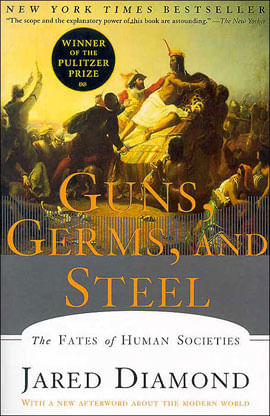
Life isn't fair--here's why: Since 1500, Europeans have, for better and worse, called the tune that the world has danced to. In Guns, Germs, and Steel, Jared Diamond explains the reasons why things worked out that way. It is an elemental question, and Diamond is certainly not the first to ask it. However, he performs a singular service by relying on scientific fact rather than specious theories of European genetic superiority. Diamond, a professor of physiology at UCLA, suggests that the geography of Eurasia was best suited to farming, the domestication of animals and the free flow of information. The more populous cultures that developed as a result had more complex forms of government and communication--and increased resistance to disease. Finally, fragmented Europe harnessed the power of competitive innovation in ways that China did not. (For example, the Europeans used the Chinese invention of gunpowder to create guns and subjugate the New World.) Diamond's book is complex and a bit overwhelming. But the thesis he methodically puts forth--examining the "positive feedback loop" of farming, then domestication, then population density, then innovation, and on and on--makes sense. Written without bias, Guns, Germs, and Steel is good global history.
Outros livros de Jared M. Diamond
Livros na mesma categoria
Dicas e recomendações para leitores
Ciência confirma: ler regularmente melhora a memória, reduz o estresse e aumenta a empatia. Veja o que a pesquisa diz e como incorporar a leitura na sua rotina.
Clubes de leitura transformam a experiência solitária de ler em algo social e enriquecedor. Saiba como funcionam, quais os benefícios e como criar o seu próprio clube.
A paralisia da escolha atinge todo leitor. Com mais de um milhão de livros publicados por ano, como decidir o próximo? Veja estratégias práticas para escolher bem e rápido.
Para escolas, universidades, autores e editoras