

Por que alunos que leem mais vão melhor em todas as matérias
Não é intuição, é ciência: o hábito de leitura correlaciona com melhor desempenho em matemática, ciências e redação. Veja o que a pesquisa comprova e o que a escola pode fazer.
Crie uma conta gratuita e continue exatamente desta página.
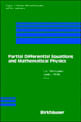
Exponential sums have been of great interest ever since Gauss, and their importance in analytic number theory goes back a century to Kloosterman. Grothendieck's creation of the machinery of l-adic cohomology led to the understanding that families of exponential sums give rise to local systems, while Deligne, who gave his general equidistribution theorem after proving the Riemann hypothesis part of the Weil conjectures, established the importance of the monodromy groups of these local systems. Deligne's theorem shows that the monodromy group of the local system incarnating a given family of exponential sums determines key statistical properties of the family of exponential sums in question. Despite the apparent simplicity of this relation of monodromy groups to statistical properties, the actual determination of the monodromy group in any particular situation is highly nontrivial and leads to many interesting questions. This book is devoted to the determination of the monodromy groups attached to various explicit families of exponential sums, especially those attached to hypergeometric sheaves, arguably the simplest local systems on G_m, and to some simple (in the sense of simple to write down) one-parameter families of one-variable sums. These last families turn out to have surprising connections to hypergeometric sheaves. One of the main technical advances of this book is to bring to bear a group-theoretic condition (S+), which, when it applies, implies very strong structural constraints on the monodromy group, and to show that (S+) does indeed apply to the monodromy groups of most hypergeometric sheaves.
Planeje no seu ritmo
Esta edição tem 594 páginas. Escolha uma meta diária possível e ajuste o plano conforme a leitura avançar.
Ritmo tranquilo
60 dias
10 páginas por dia
Ritmo constante
30 dias
20 páginas por dia
Ritmo intenso
20 dias
30 páginas por dia
Outros livros de Nicholas M. Katz
Livros na mesma categoria
Sua vida de leitura
A Lireo é uma plataforma para organizar sua estante, registrar páginas e impressões, publicar resenhas e encontrar pessoas que estão lendo os mesmos livros.
Dicas e recomendações para leitores
Não é intuição, é ciência: o hábito de leitura correlaciona com melhor desempenho em matemática, ciências e redação. Veja o que a pesquisa comprova e o que a escola pode fazer.
Ciência confirma: ler regularmente melhora a memória, reduz o estresse e aumenta a empatia. Veja o que a pesquisa diz e como incorporar a leitura na sua rotina.
Você começa a ler com entusiasmo e para depois de uma semana. Conheça a ciência por trás da formação de hábitos e as estratégias práticas para finalmente fazer a leitura grudar.
Para escolas, universidades, autores e editoras