

Por que alunos que leem mais vão melhor em todas as matérias
Não é intuição, é ciência: o hábito de leitura correlaciona com melhor desempenho em matemática, ciências e redação. Veja o que a pesquisa comprova e o que a escola pode fazer.
Crie uma conta gratuita e continue exatamente desta página.
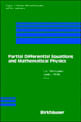
A. Grothendieck's work on algebraic geometry is one of the most important mathematical achievements of the twentieth century. In the early 1960s, he and M. Artin introduced étale cohomology to extend the methods of sheaf-theoretic cohomology from complex varieties to more general schemes. This work found many applications, not only in algebraic geometry but also in several different branches of number theory and in the representation theory of finite and p-adic groups. In this classic book, James Milne provides an invaluable introduction to étale cohomology, covering the essential features of the theory. Milne begins with a review of the basic properties of flat and étale morphisms and the algebraic fundamental group. He then turns to the basic theory of étale sheaves and elementary étale cohomology, followed by an application of the cohomology to the study of the Brauer group. After a detailed analysis of the cohomology of curves and surfaces, Milne proves the fundamental theorems in étale cohomology--those of base change, purity, Poincaré duality, and the Lefschetz trace formula--and applies these theorems to show the rationality of some very general L-series.
Planeje no seu ritmo
Esta edição tem 338 páginas. Escolha uma meta diária possível e ajuste o plano conforme a leitura avançar.
Ritmo tranquilo
34 dias
10 páginas por dia
Ritmo constante
17 dias
20 páginas por dia
Ritmo intenso
12 dias
30 páginas por dia
Outros livros de James S. Milne
Livros na mesma categoria
Sua vida de leitura
A Lireo é uma plataforma para organizar sua estante, registrar páginas e impressões, publicar resenhas e encontrar pessoas que estão lendo os mesmos livros.
Dicas e recomendações para leitores
Não é intuição, é ciência: o hábito de leitura correlaciona com melhor desempenho em matemática, ciências e redação. Veja o que a pesquisa comprova e o que a escola pode fazer.
Ciência confirma: ler regularmente melhora a memória, reduz o estresse e aumenta a empatia. Veja o que a pesquisa diz e como incorporar a leitura na sua rotina.
Você começa a ler com entusiasmo e para depois de uma semana. Conheça a ciência por trás da formação de hábitos e as estratégias práticas para finalmente fazer a leitura grudar.
Para escolas, universidades, autores e editoras