









Por que alunos que leem mais vão melhor em todas as matérias
Não é intuição, é ciência: o hábito de leitura correlaciona com melhor desempenho em matemática, ciências e redação. Veja o que a pesquisa comprova e o que a escola pode fazer.
Crie uma conta gratuita e continue exatamente desta página.
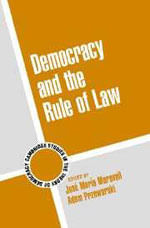
This book addresses the question of why governments sometimes follow the law and other times choose to evade the law. The traditional answer of jurists has been that laws have an autonomous causal efficacy: law rules when actions follow anterior norms; the relation between laws and actions is one of obedience, obligation, or compliance. Contrary to this conception, the authors defend a positive interpretation where the rule of law results from the strategic choices of relevant actors. Rule of law is just one possible outcome in which political actors process their conflicts using whatever resources they can muster: only when these actors seek to resolve their conflicts by recourse to la, does law rule. What distinguishes 'rule-of-law' as an institutional equilibrium from 'rule-by-law' is the distribution of power. The former emerges when no one group is strong enough to dominate the others and when the many use institutions to promote their interest. Cross-disciplinary: law, politics,economics, philosophy. Multi-methodological: analytical, comparative, historical, case studies. Multi-country authors. Part I: 1. Lineages of the rule of law; 2. Power, rules, and compliance; 3. Obedience and obligation in the Rechtsstaat; 4. The political foundations of democracy and the rule of law; 5. Why do political parties obey results of elections?; Part II: 6. The majoritarian reading of the ‘rule of law’; 7. How can the rule of law rule? Cost imposition through decentralized mechanisms; 8. Dictatorship and the rule of law: rules and military power in Pinochet’s Chile; Part III: 9. Courts as instruments of horizontal accountability: the case of Latin Europe; 10. Rule of democracy and rule of law; 11. The rule of law as a political weapon; 12. The question of the rule of law in Michel de Montaigne’s Essais.
Planeje no seu ritmo
Esta edição tem 334 páginas. Escolha uma meta diária possível e ajuste o plano conforme a leitura avançar.
Ritmo tranquilo
34 dias
10 páginas por dia
Ritmo constante
17 dias
20 páginas por dia
Ritmo intenso
12 dias
30 páginas por dia
Livros na mesma categoria
Sua vida de leitura
A Lireo é uma plataforma para organizar sua estante, registrar páginas e impressões, publicar resenhas e encontrar pessoas que estão lendo os mesmos livros.
Dicas e recomendações para leitores
Não é intuição, é ciência: o hábito de leitura correlaciona com melhor desempenho em matemática, ciências e redação. Veja o que a pesquisa comprova e o que a escola pode fazer.
Ciência confirma: ler regularmente melhora a memória, reduz o estresse e aumenta a empatia. Veja o que a pesquisa diz e como incorporar a leitura na sua rotina.
Você começa a ler com entusiasmo e para depois de uma semana. Conheça a ciência por trás da formação de hábitos e as estratégias práticas para finalmente fazer a leitura grudar.
Para escolas, universidades, autores e editoras