
Por que alunos que leem mais vão melhor em todas as matérias
Não é intuição, é ciência: o hábito de leitura correlaciona com melhor desempenho em matemática, ciências e redação. Veja o que a pesquisa comprova e o que a escola pode fazer.
Crie uma conta gratuita e continue exatamente desta página.
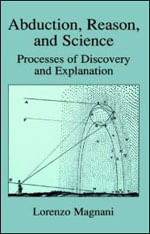
More than a hundred years ago, the great American philosopher Charles Sanders Peirce coined the term `abduction' to refer to inference that involves the generation and evaluation of explanatory hypotheses. The study of abductive inference was slow to develop, as logicians concentrated on deductive logic and on inductive logic based on formal calculi, such as probability theory. In recent decades, however, there has been renewed interest in abductive inference, from two primary sources. Philosophers of science have recognized the importance of abduction in the discovery and evaluation of scientific theories, and researchers in artificial intelligence have realized that abduction is a key part of medical diagnosis and other tasks that require finding explanations. Psychologists have been slow to adopt the terms `abduction' and `abductive inference', but have been showing increasing concerns with causal and explanatory reasoning. Thus abduction is now a key topic of research in cognitive science, the interdisciplinary study of mind and intelligence. This new book Abduction, Reason, and Science contributes to this research in several interesting ways. Firstly, it ties together the concerns of philosophers of science and AI researchers, showing for example the connections between scientific thinking and medical expert systems. Secondly, it lays out a useful general framework for discussion of a variety of kinds of abduction. Thirdly, it develops important ideas about aspects of abductive reasoning that have been relatively neglected in cognitive science, including the use of visual and temporal representations and the role of abduction in the withdrawal of hypotheses. The author has provided a valuable contribution to the renaissance of research on explanatory reasoning.
Planeje no seu ritmo
Esta edição tem 224 páginas. Escolha uma meta diária possível e ajuste o plano conforme a leitura avançar.
Ritmo tranquilo
23 dias
10 páginas por dia
Ritmo constante
12 dias
20 páginas por dia
Ritmo intenso
8 dias
30 páginas por dia
Livros na mesma categoria
Sua vida de leitura
A Lireo é uma plataforma para organizar sua estante, registrar páginas e impressões, publicar resenhas e encontrar pessoas que estão lendo os mesmos livros.
Dicas e recomendações para leitores
Não é intuição, é ciência: o hábito de leitura correlaciona com melhor desempenho em matemática, ciências e redação. Veja o que a pesquisa comprova e o que a escola pode fazer.
Ciência confirma: ler regularmente melhora a memória, reduz o estresse e aumenta a empatia. Veja o que a pesquisa diz e como incorporar a leitura na sua rotina.
Você começa a ler com entusiasmo e para depois de uma semana. Conheça a ciência por trás da formação de hábitos e as estratégias práticas para finalmente fazer a leitura grudar.
Para escolas, universidades, autores e editoras