
Caderno Lireo45
Dicas
Dicas
Como escolher o melhor e-reader: Kindle, Kobo ou tablet?
E-readers revolucionaram a leitura digital, mas as opções são muitas. Kindle ou Kobo? Básico ou premium? Com ou sem luz? Um guia para acertar na escolha.
Turning Poits In Ancient History
Crie uma conta gratuita e continue exatamente desta página.
Crie uma conta gratuita e continue exatamente desta página.
In 1177 B.C., marauding groups known only as the "Sea Peoples" invaded Egypt. The pharaoh's army and navy managed to defeat them, but the victory so weakened Egypt that it soon slid into decline, as did most of the surrounding civilizations. After centuries of brilliance, the civilized world of the Bronze Age came to an abrupt and cataclysmic end. Kingdoms fell like dominoes over the course of just a few decades. No more Minoans or Mycenaeans. No more Trojans, Hittites, or Babylonians. The thriving economy and cultures of the late second millennium B.C., which had stretched from Greece to Egypt and Mesopotamia, suddenly ceased to exist, along with writing systems, technology, and monumental architecture. But the Sea Peoples alone could not have caused such widespread breakdown. How did it happen? In this major new account of the causes of this "First Dark Ages," Eric Cline tells the gripping story of how the end was brought about by multiple interconnected failures, ranging from invasion and revolt to earthquakes, drought, and the cutting of international trade routes. Bringing to life the vibrant multicultural world of these great civilizations, he draws a sweeping panorama of the empires and globalized peoples of the Late Bronze Age and shows that it was their very interdependence that hastened their dramatic collapse and ushered in a dark age that lasted centuries.
Outros livros de Eric H. Cline

Depois de 1177 a.C. - o Colapso da Idade do Bronze e a Guerra das CivilizaçõEs
Eric H. Cline

1177 B.C. - a Graphic History Of The Year Civilization Collapsed
Eric H. Cline

Love, War, And Diplomacy
Eric H. Cline
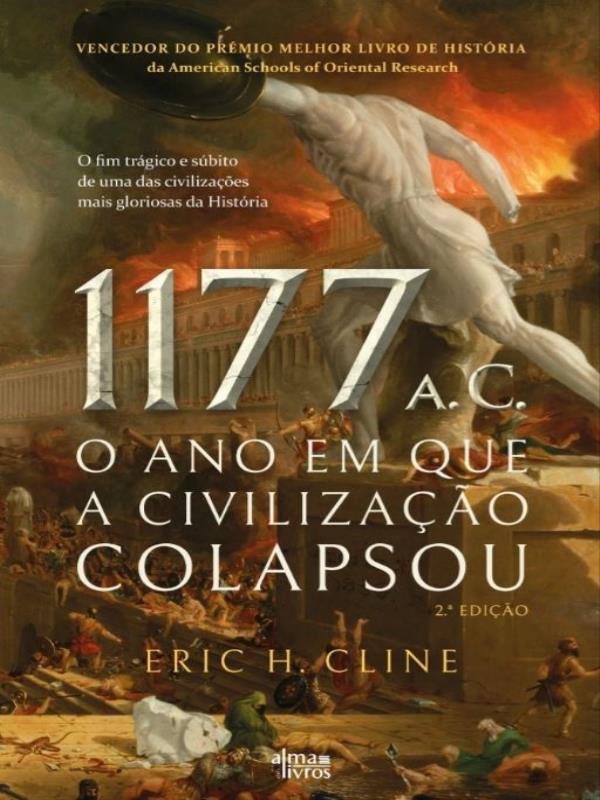
1177 a.C - o Ano e Que a Civilização Colapsou
Eric H. Cline
Biblical Archaeology - a Very Short Introduction
Eric H. Cline
Trojan War, The - a Very Short Introduction
Eric H. Cline
Livros na mesma categoria

On The Suffering Of The World
Arthur Schopenhauer

Fatos e Personagens em Torno de um Regime
Octavio Tarquinio de Souza

A Invenção das Fronteiras
Leandro Baller

Segredos do ImpéRio Inca
Felipe Boschetti

Invisible Hand, The
Adele Smith

Le Musee Aphemere
Francis Haskell

HistóRia e Cultura
Maria do Espirito Santo Rosa Cavalcante Ribeiro

Bulfinch'S Mythology
Thomas Bulfinch

Conciencia Nazi, La
Claudia Koonz
Historia de La Teoria Politica, 4 - Historia, Prog
Autor Não Cadastrado
Corrupcion Politica, La
Autor Não Cadastrado

Napoleão Bonaparte
Lucia Maria Bastos Pereira das Neves
Dicas e recomendações para leitores
E-readers revolucionaram a leitura digital, mas as opções são muitas. Kindle ou Kobo? Básico ou premium? Com ou sem luz? Um guia para acertar na escolha.
A guerra entre o papel e a tela não tem um vencedor único, depende do leitor e do contexto. Conheça os prós e contras de cada formato e como tirar o melhor dos dois.
O aluno que lê por obrigação raramente vira leitor. Mas há formas de apresentar a leitura escolar que mudam essa equação. Veja o que a pesquisa diz e como professores estão fazendo diferente.
Para escolas, universidades, autores e editoras